


 For Darryl Franklin, a simple search for a local hand-drumming class sparked an unexpected journey—one that would ultimately lead to the founding of Benkadi, a Community Partners fiscally sponsored partner that uses the power of West African drumming and dance to build connection, foster belonging, and celebrate cultural traditions. A longtime entertainment executive and attorney whose career has spanned Disney Music Group, live events, and global sports and entertainment, Darryl shares how one transformative experience inspired a new purpose.
In this Q&A, he reflects on the origins of Benkadi, the importance of authentic partnership, and the role of arts and culture in bringing communities together.
- Your path to founding Benkadi began with a simple Google search for a hand drumming class. How did that experience inspire you to create an organization centered on the power of West African drum and dance?
After decades of working in the recording industry, I wanted to learn to play an instrument. Hand drumming seemed to have the lowest barrier to entry, so I searched online for a class and found Motherland Music in Inglewood, a wonderful percussion shop specializing in African and other Indigenous musical traditions. The instructors I met there—many of whom I still study with today—became Benkadi’s first teachers and performers.
Any drummer or dancer will tell you that regular practice can be physically, mentally, and emotionally transformative. I experienced that as a student and wanted to share it with others. As the father of five boys who have all benefited from public-school music programs, I also knew how powerfully music education can affect children. Yet schools with the greatest needs often have the least access to it.
I also came to understand that my teachers were world-class professional artists. They have performed in major Hollywood films and some of the best-known stages in America and beyond. Despite their extraordinary talent and experience, many faced the financial instability common among working artists and were forced to step away from teaching to support their families. At the same time, West African arts remain dramatically underexposed and underappreciated in the United States.
The broader social conversation following the murder of George Floyd was the catalyst that moved me from thinking to acting. The “All Lives Matter” response to “Black Lives Matter” struck me as reflecting, at best, a lack of understanding that equal rights have not always resulted in equal treatment. I thought it was difficult to develop empathy for cultures and experiences to which we have had little exposure. As someone who did not grow up in the United States, I also came to appreciate how the suppression of African and Black culture continued long after slavery formally ended.
Once I understood what Benkadi could become, the impact it could have, and the needs it could address, the question was no longer, “Why start it?” It was, “How could I not?”
- Benkadi is rooted in the belief that music and movement can bring people together across cultures and communities. Why do you think these traditions are such powerful tools for building connection, healing, and belonging?
Music and movement are common to cultures everywhere, and their effects are profound. Rhythm, singing, and movement are woven into our earliest development and help us all learn the physical coordination and communication skills needed to walk and speak.
For most of human history, entertainment was participatory. People sang, danced, and made music together. Only relatively recently have most of us shifted from actively participating in those activities to watching a small number of people perform.
Making music and dancing together breaks down barriers. They require people to listen, respond, cooperate, and become part of something larger than themselves. Try it, and I challenge you not to feel better and more connected to the people around you afterward.
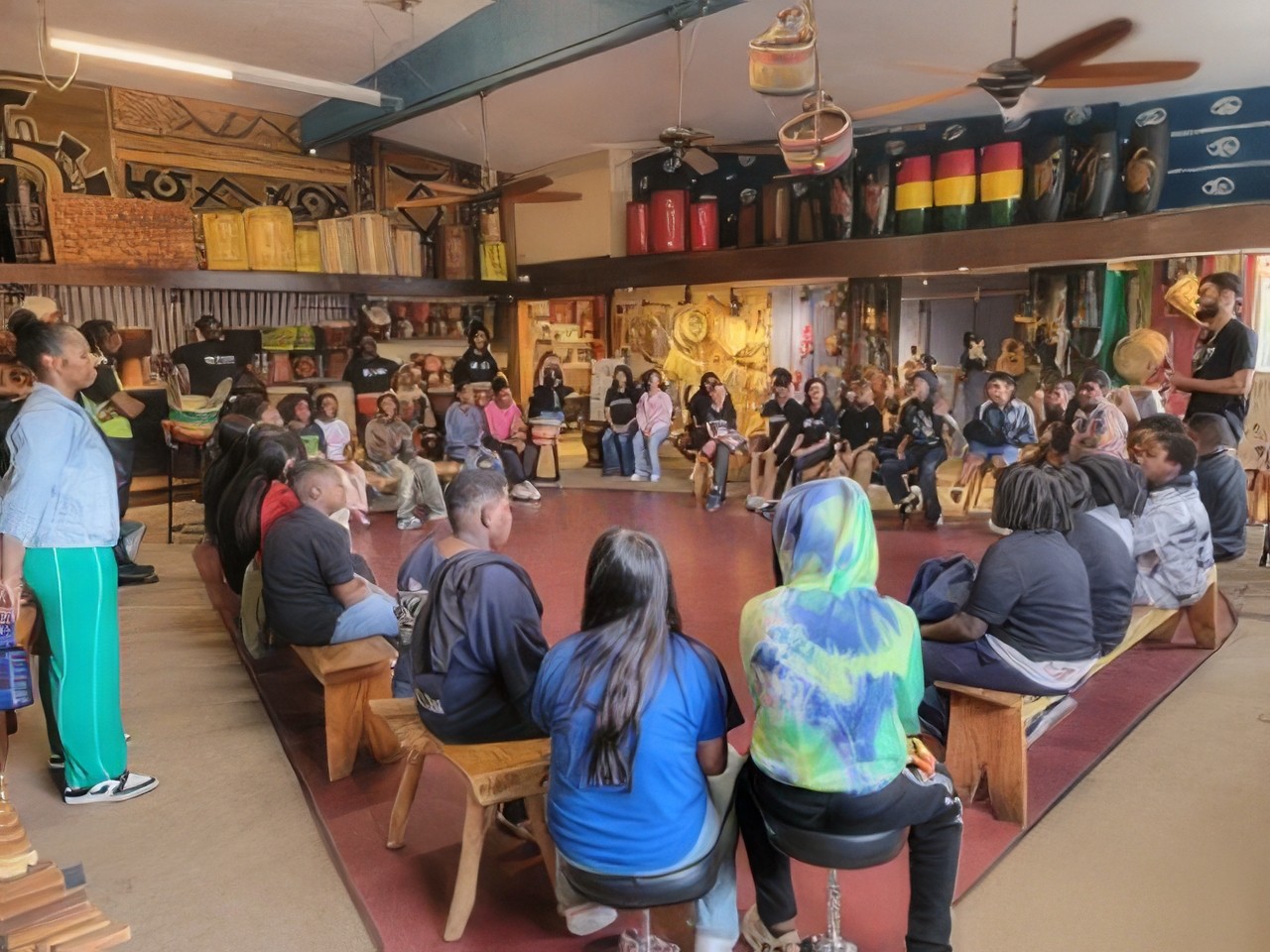
- You often describe yourself with humor as “a middle-aged white guy from England who is a sub-average drummer and a terrible dancer.” What has that journey taught you about building an organization that authentically honors and elevates West African traditions and the artists?
That description is entirely accurate! But I bring other skills: decades of experience in entertainment and sports as a lawyer, talent manager, and event producer; the perspective of raising five children; and an understanding of what it feels like to be a beginner student.
My role as founder is not to present myself as an authority on West African culture. It provides the business, legal, operational, and strategic expertise needed to run a professional arts-education organization. Our world-class artists and teachers lead the teaching, performing, and sharing of their cultures.
We work as a team, with each person contributing expertise in their own area. Authenticity begins with understanding your role, respecting others’ expertise, and ensuring that the artists whose traditions are being shared remain at the center of the work.
- Benkadi is a fiscally sponsored project of Community Partners. How has fiscal sponsorship helped your organization grow, and what advice would you offer to other emerging leaders who are considering this model?
When I first conceived of Benkadi, I called nonprofit attorney Arthur Rieman, who introduced me to fiscal sponsorship and Community Partners. Without his recommendation—and without Community Partners agreeing to sponsor us—Benkadi might never have gotten off the ground or still be fulfilling its mission five years later.
Providing services to schools, businesses, and local governments requires a robust organizational infrastructure, including accounting, insurance, contracting, compliance, and other support that a small nonprofit can struggle to build and sustain independently. Starting and operating a nonprofit means running a real business—make no mistake about it.
Community Partners allows the Benkadi team to concentrate on our mission while meeting the rigorous requirements of our partners and the laws governing our work. Fiscal sponsorship has also made us eligible for grants and other support that would otherwise have been unavailable to us.
A desire to do good is essential, but without a strong organizational foundation, it is difficult to create a lasting impact. My advice to emerging leaders is to be realistic about what happens behind the scenes and to find partners who can provide the infrastructure your mission deserves.
With Community Partners’ support, Benkadi has delivered more than 30,000 hours of programming to nearly 800 elementary-school students at 10 schools across South and Central Los Angeles, Watts, Downey, Inglewood, Long Beach, Gardena, Culver City, and Leimert Park. We have also operated and supported summer camps and participated in civic and corporate celebrations of Juneteenth, Martin Luther King Jr. Day, and other special occasions.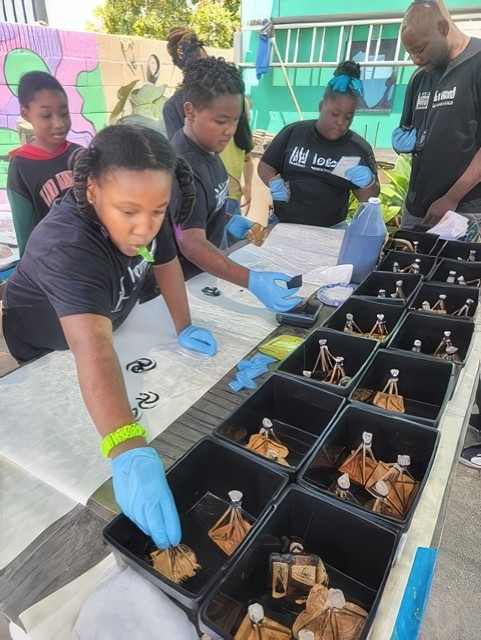
- As you look ahead, what is your vision for Benkadi over the next five years?
Reputations take years to build and minutes to lose, so Benkadi’s growth must be sustainable. We want to serve more schools, camps, communities, and events while continuing to deliver excellence in everything we do.
Over the longer term, I would like Benkadi—whose name means “togetherness is good” or “togetherness is sweet” in Bambara—to grow into a broader world-music, percussion, and dance program that introduces young people to underrepresented rhythm and dance traditions from around the world.
Concrete goals include securing an LAUSD Arts Community Network and/or BSAP bench contract and developing one or two strategic alliances that advance the missions of everyone involved.
I am a great believer in “show, don’t just tell.” This video captures the energy, joy, cultural learning, and community that Benkadi offers: www.bit.ly/BenkadiCamp
We are also always open to visiting a community or organization and offering a complimentary introductory session so people can experience the power of the program firsthand.
Learn more about Benkadi and how you can get more involved at www.benkadi.live.
Join our mailing list!
Keep up on the latest from Community Partners—our partnerships, learnings, grant opportunities, resources and more.