


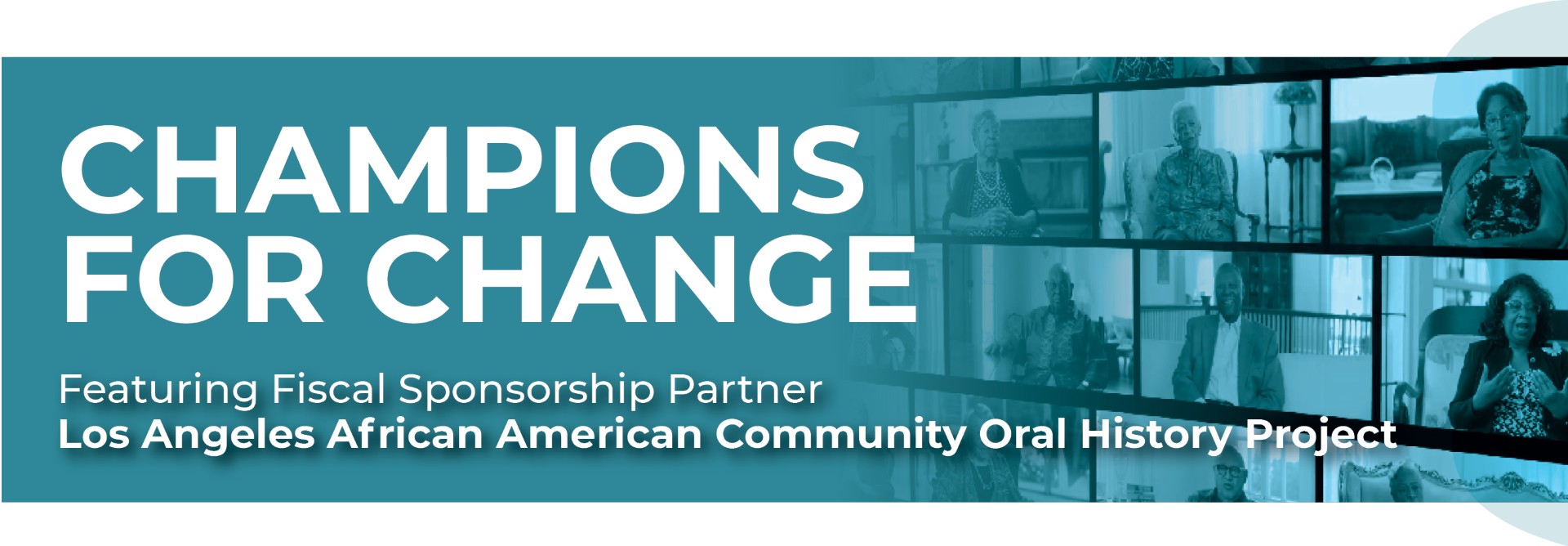
 When Valerie Lynne Shaw describes the Los Angeles African American Community Oral History Project, she calls it “a project that is very simple… yet very necessary.”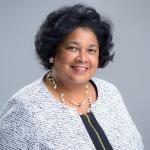
A longtime civic leader who was born and raised in Los Angeles, Valerie Lynne Shaw grew up in a close-knit Black neighborhood shaped by the Great Migration—an era when families were building community, opportunity, and civic pride across the city. As a City Commissioner on the Board of Public Works, Shaw first launched the Los Angeles African American Community Oral History Project in 2008, videotaping eight individuals whose lives helped shape Los Angeles’ Black civic and social infrastructure. More than a decade later, she renewed and expanded the work—recognizing an urgent need to preserve these voices amid dramatic demographic and economic shifts across the city.
A turning point came at the funeral of Mrs. Ella Graham, the last surviving mother on the block where Shaw grew up. Former neighbors, now senior citizens, traveled from across the country. Some had not seen one another in 50 years. They gathered not only to honor a beloved matriarch but to remember a close-knit Black neighborhood that once represented stability, opportunity, and collective care.
“Economic forces, demographic changes, and gentrification,” Shaw reflects, “have created the end of Black neighborhoods in L.A. So it is important to document the voices and lives of the people who are left—so that at least the archivists know we were here.”
In 2022, through fiscal sponsorship with Community Partners, she expanded the effort by filming leaders from Watts, South Los Angeles, and Mid-City/Crenshaw. Since its inception, the project has filmed 24 trailblazers, including judges, doctors, civic leaders, activists, and cultural influencers—individuals who were instrumental in building and sustaining Black Los Angeles. The goal now: chronicle 50 lives in total.
Each interview is a 20-minute portrait—woven with photographs, personal reflection, and historical context—capturing not just professional achievements, but values, motivations, and lived experience.
Among them:
- Larry Aubry, a journalist and civic advocate who chronicled the political and social currents shaping the city.
- Bette Braxton, a pioneering entertainment executive and manager of Grammy-winning artist Roberta Flack, who helped expand opportunities in the music industry.
- Tim Watkins, CEO of the Watts Labor Community Action Committee, whose workforce development and social service programs have provided training, housing, and economic mobility for thousands.
- Dr. Herbert Carter, civil rights leader and former president of Los Angeles Southwest College, whose leadership helped expand educational access and equity in South Los Angeles.
These are not always household names—but they were foundational to the civic backbone of their communities.
“The videos are a gift,” Shaw says. “A gift to the families. A gift to the future. A gift to the archives.”
The collection is permanently housed at California State University- Fullerton’s Center for Oral and Public History home to one of the largest oral history archives in the state, ensuring these stories remain accessible to scholars and future generations.
Entirely volunteer-led, the initiative relies on donations and project-based funding to continue its work. Shaw is joined by a dedicated team including Cora Jackson-Fossett, Erin Kaplan, and Bailey Berry, who together are committed to documenting 50 lives that represent the rise, resilience, and evolution of Black Los Angeles.
Having lived through both the growth and the decline of the city’s African American population—from nearly 20% of Los Angeles to a much smaller 7% percentage today—Shaw sees this effort as both preservation and celebration.
“I’ve lived through the arc,” she says. “I want to celebrate what was—and what it is.”
Through the Los Angeles African American Community Oral History Project, those voices endure—ensuring that the architects of Black Los Angeles are remembered not as footnotes, but as trailblazers.
Learn more about the Los Angeles African American Community Oral History Project here
Next Post
ENGINEER FACTORY
February 19, 2026
Join our mailing list!
Keep up on the latest from Community Partners—our partnerships, learnings, grant opportunities, resources and more.